What arrives in a box
A season starts as a delivery, a phone full of photographs and no naming convention. Intake is the unglamorous half of fashion imagery and it is where the time actually goes, which is why the house does it first and asks you only to approve the result.
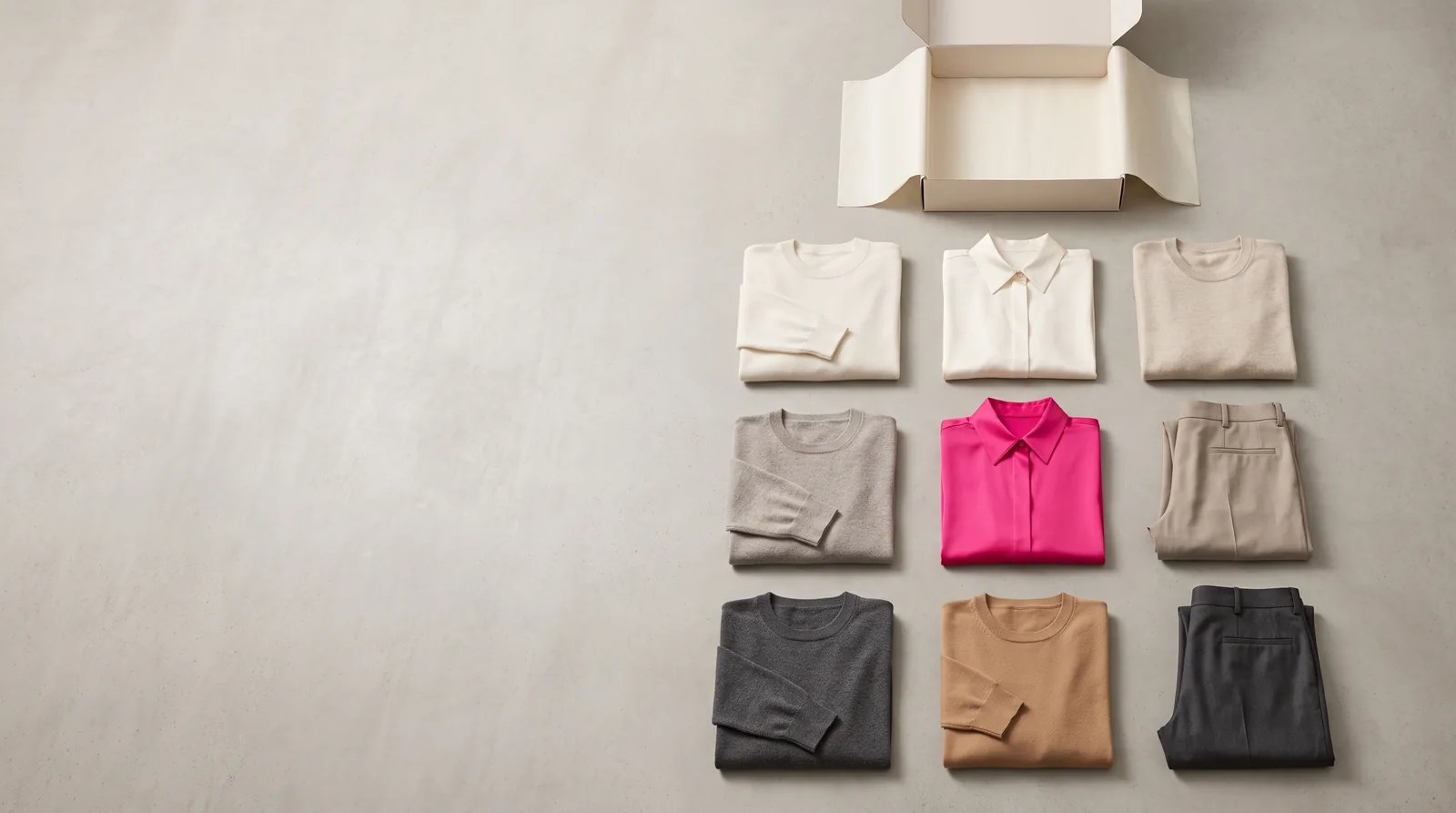
A season does not arrive as a collection. It arrives as a box, a phone full of
photographs taken under a strip light, a folder somebody named new stuff final, and four
hundred garments that need to be findable by Thursday. Intake is the unglamorous half of
fashion imagery, it is where the time actually goes, and it is almost entirely a machine's
job.
Nobody photographs this part. Anyone who has run a studio knows the shoot is the easy day. The hard ones sit either side of it: getting the pieces into an order that can be shot, and getting the results back into an order somebody else can use in six months, when the range is being re-listed by a person who was not there.
What a delivery actually looks like
Never a clean set. Usually all of these at once:
- Pieces that have never been photographed.
- Pieces with a supplier flat lay of unknown provenance, white-balanced to a room you have never stood in.
- Pieces already packshotted properly, from a previous drop, in a different folder.
- The front and the back of one shirt, in two files whose names do not agree.
- A handful of things nobody can identify without opening the label.
Each of those needs a different action, and working out which action is the work. So that is what the house does first: read every frame, decide what it is, tag it, and propose the groupings, before asking you a single question.
Matching front and back is the whole trick
The most valuable thing an intake system does is notice that two files are one garment. Get it right and the collection becomes navigable. Get it wrong and every step downstream inherits the mistake, including the listing that goes live wearing somebody else's back view.
With a SKU it is close to certain. The number is on the label, in the filename or on a tag in the frame, and the match is exact. Without one it is a judgement: same cloth, same colour, same buttons, same hem. The house shows you its proposals with its confidence rather than filing them quietly, and that distinction is the whole design. A system that merges silently and is wrong one time in ten is worse than one that asks, because you will not find the tenth until a buyer does.
This is why the house asks for the SKU wherever it can, and why a barcode scanner earns its place on the intake bench. It turns the hardest matching problem in the pipeline into a lookup.
Colourways are where it stays hard. Two pieces in the same cut and a different dye are close to identical to any matcher, and a confidence score will not tell you which is which. Those are the rows to read properly.
Order is the deliverable
The frame at the top of this post holds both states on purpose: the emptied box still standing there, and the pieces already squared into a grid. Nothing has been retouched and nothing has been developed. A pile became an order, and that is most of the value.
An organised collection is what makes everything after it cheap. Packshots run as a batch, because the house knows what has already been shot, which is on the rail. A lookbook pulls pieces by name instead of by hunting, and the running order survives into the deliverable, which is the locked frame. A reshoot becomes a filter rather than an archaeology project.
Disorder compounds in the other direction, and it charges interest. Every step downstream of a messy intake pays for the same mess again.
Do not wait for good photographs
The most common blocker is a belief that intake needs a shoot first. It does not, and insisting on it is how a collection sits in a box for three weeks. A phone photograph of a garment on a hanger under mixed light is enough for the house to identify the piece, classify it, tag it and file it. At this stage the frame is not the deliverable. The record is.
Get the record in on the day the box lands. Develop the good frames later, from an organised collection, when you actually know what you have.
Where it stops being automatic
Intake looks like it should run end to end without you, and it nearly does, but the last step stays yours. The house proposes and you approve. A review sheet with forty proposals takes four minutes to walk and saves the week where somebody discovers that two sub-collections were merged in March.
That is the shape of every automation in the house: do all the work, then show it, then wait. Never file silently. The longer argument for keeping the approval with you is taste doesn't type.
The smart upload, the folders and the review sheet are in the collections docs, and what shipped with them is in what the house has shipped. Once the collection is in order, on the rail is the next thing to read.
Questions
- What is intake?
- Intake is everything between a delivery arriving and the collection being usable: unpacking, gathering or shooting whatever imagery exists, working out which frames belong to which garment, naming them, and separating what still needs shooting from what does not. It is the unglamorous half of a season and it is where most of the time actually goes.
- How does FLAM sort a folder of mixed photographs?
- You drag the whole folder in, flat lays and phone photographs and existing packshots and hung garments and sub-folders, and the house reads every frame, classifies what it is, tags it, and proposes which frames are the same garment from a different angle. Nothing is filed until you approve the proposals.
- Do I need SKUs for this to work?
- No, but they make the matching much stronger. With a SKU in the filename or on a visible label, front-and-back matching becomes close to certain. Without one the house matches on the garment itself and shows you its proposals with lower confidence, so you can correct them quickly.
- What should I photograph before uploading?
- Whatever you have. You should not need a shoot before you can start. A phone photograph of a garment on a hanger under mixed light is enough for the house to identify the piece, tag it and put it in the right place. The good frames come later, developed from the organised collection.