A thousand pieces, and the bar already knows
A library of a thousand developed frames is not a gallery problem, it is an operating problem. FLAM's library now has two views — a wall for looking and a list for working — and a selection bar that says what the house already knew about your selection: how many pieces nobody has read yet, how many are a front with no back, and one summed price before a token moves.
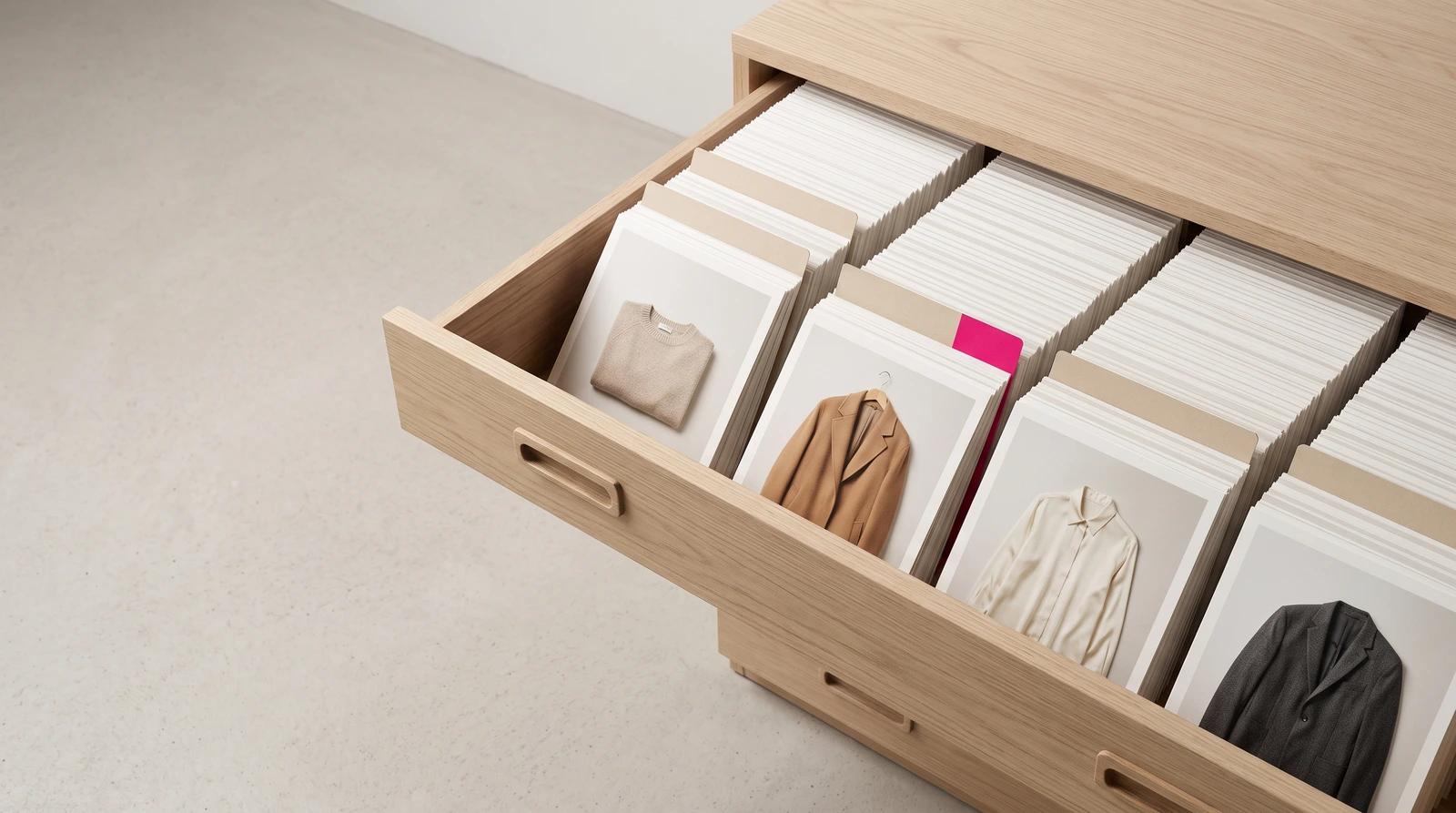
A thousand developed frames is not a gallery problem, it is an operating problem. The question at that scale is never "show me everything" — it is "which of these still has nothing on it, what would it cost to fix all of them, and can I do it in one act." The library now answers all three, and it answers the cost question before a token moves.
Two views, because there are two questions
The wall stays. It is how you look at work: frames on the dark viewing surface, newest first, revealed in windows as you scan. A gallery wall is scanned, not scrolled at speed, and page numbers are filing-cabinet language, so it has neither.
The list is the new half, and it is built for the other question. It sorts by any column, holds a thousand rows without strain, and shift-click takes every row between two clicks — a whole run chosen in one gesture. The wall is for the eye; the list is for the day the box lands.
One grammar spans both: click looks, choose selects, and a selection made in one view is still standing in the other.
The bar says what the house already knew
Choose some pieces and a bar appears. Its first line is the count, and then two facts you would otherwise have gone and counted yourself: how many of these has nobody read yet, and how many are a front with no back anywhere in its group.
Neither fact is computed for the occasion. The judge wrote its verdicts when the frames landed; the house stamped the groups when the pieces were filed. Both were being held and rendered nowhere. The bar is simply the moment they get said — while you are deciding what to do with exactly these pieces, which is the only moment they are worth saying.
One of the two facts wears the house's colour, and only one: a piece with no back cannot ship, so it outranks a piece not yet read. And when neither fact is true, there is no line at all. An empty reassurance is noise.
One summed quote, before anything runs
Batch work at scale has a pricing failure mode everyone has met: you learn the total after it ran. The bar refuses that order of events. Ask for a paid action — say, removing the background from three chosen pieces — and the house sums the price over the selection on the server, then replaces the verbs with a sentence: 3 pieces · background removal · 6 tokens, with Send it and Not now beside it. Nothing is spent until you answer the sentence you were shown, and the number quoted is the number settled.
Background removal is 2 tokens a piece, straight from the price book — the quote is that row, summed, never an estimate.
One honest note on where this stands today: the quote is real and the whole walk is reviewable end to end, but the paid batch run itself lands with the capture path that ships next. We would rather say that plainly than let a demo imply a promise.
The one confirmation the bar keeps is delete, and it names the number before it acts. Everything else is reversible and asks nothing.
Why this matters more than a prettier grid
Most tools treat an asset library as storage with thumbnails. But a house's library is where the next decision gets made — what to reshoot, what to send through a workflow, what is still missing its back view before the season can list. Every one of those decisions needs facts the system already has and usually keeps to itself.
The bar is a small surface with one conviction behind it: the house should say what it knows at the moment the knowing is useful, and it should say the price before the spend. That conviction is the same one behind every quote card in the product. Here it just meets a thousand pieces at once.
Related
- Working the library, step by step: the library.
- How pieces get their names and groups on the way in: the intake.
- What shipped, and when: /changelog#the-library-at-scale.
Questions
- How does FLAM handle a library of a thousand pieces?
- With two views of the same library. The wall shows frames as a gallery for looking at work; the list is built for operating at scale — it sorts by column, scrolls a thousand rows without strain, and shift-click takes every row between two clicks. The same selection carries across both.
- What does the selection bar tell me?
- The count, and then the two facts you would otherwise go and count yourself: how many of the selected pieces nobody has read yet, and how many are a front with no back anywhere in their group. Both facts were already held by the house; the bar is where they finally get said, at the moment you are deciding what to do.
- When do I see what a batch will cost?
- Before anything runs, as one number. Ask for a paid action on a selection and the house sums the price over every piece server-side and answers with a sentence — how many pieces, what work, how many tokens — and nothing is spent until you confirm it. There is no per-item surprise afterwards.