No prop is invented
A comment in FLAM's own source code read 'Seated on the seamless itself: no prop is invented' — a workaround for a model that imagines a stool the moment a pose implies one. The workaround sat in the file for weeks. Now the furniture is castable, every piece rides a frame by name, and a look with nothing cast carries an explicit instruction against inventing a chair.
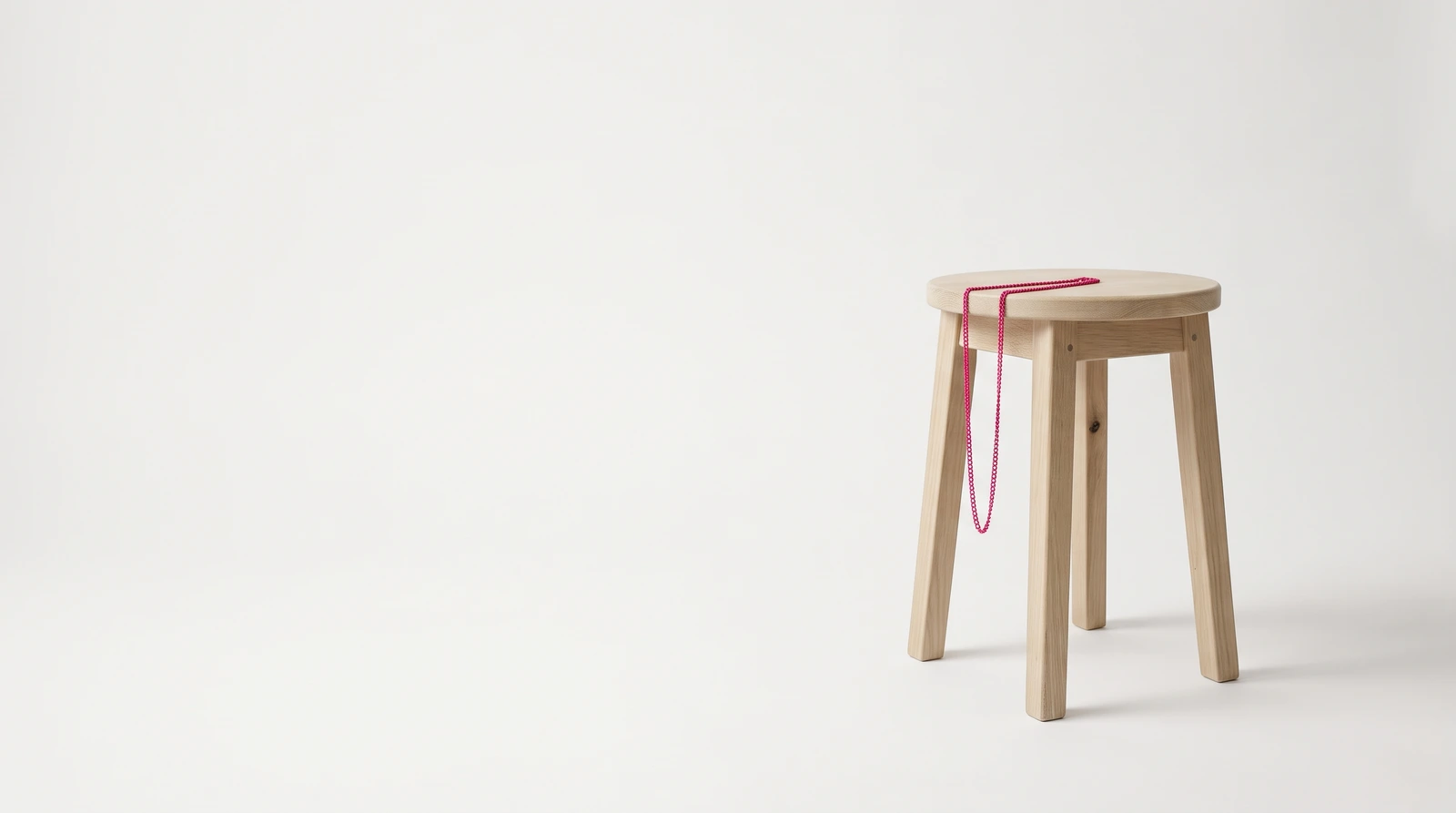
Every piece in a look — the dress, the chain, the drops, the stool your house shoots everything on — now rides each frame under the name your library knows it by, the judge is shown the piece before being asked about it, and a look with no furniture cast carries an explicit instruction against inventing any. The best way to explain why is a comment we wrote in our own code weeks ago.
The note in the file
FLAM's pose library includes a seated pose. It exists because sitting is what shows a garment's weight — how the fabric gathers and settles rather than how it hangs. The source note beside it reads:
Seated on the seamless itself: no prop is invented, so the background-preserve paragraph stays honest.
That is a workaround, written by someone who had hit a wall. Ask a model for a seated frame and it needs a seat, and unless something forbids it, it will imagine one — a different one each time. The same shoot would come back with four different stools across four frames, and nobody had told the model it could not do that, because nobody had realised the instruction was missing. So the pose was written to put her on the studio floor, where no seat is implied and nothing has to be invented.
The note sat in the file doing its quiet job while the real answer was built. The real answer is not avoiding furniture. It is casting it.
The furniture becomes a piece
A set piece — the velvet sofa, the ash stool, the one chair — is now something you file in your library like a garment. Cast it into a look and it rides every frame as a reference image, with an instruction that says plainly it is an object standing in the room, not something she wears. It is held to its own photograph: same form, same proportions, same materials. Not a plausible stool. That stool.
And the other half of the fix is the inverse: when you cast no furniture, none appears. The look carries the instruction the seated pose always needed: nothing to sit on may be invented. The workaround in the comment is now a law in the prompt.
A name, not a category
The subtler half of this release is a naming problem. A look's instructions used to be built from each piece's category, and there is one word per category. A necklace and a pair of drops both compiled to "the jewelry shown in reference image N" — the same sentence twice, pointing at two different photographs, with the model free to choose which it believed.
Now the piece's own name rides: the ivory slip dress, the gold chain necklace, the pearl drops, each with its reference image. You never type these names. Every upload is read and named when it lands, free, and that noun is what travels. A piece that never got a usable name falls back to its category rather than putting a filename in front of the model.
This fixed garments too. Two tops in one look had exactly the same ambiguity, and nobody had noticed because nobody had complained yet.
The judge is shown the piece before it is asked
We have written before about the ugliest mechanic in grading generated imagery: a comparison question with nothing to compare against does not produce a cautious answer, it produces silence, and silence scores clean. The prop version of that bug was live. The judge carries four references into a reading, and it used to take the first four in staging order — on a full look, the late-staged pieces never arrived, and the questions about them were asked anyway.
The four are now chosen by role: the model first, then the subject of the crop, then the props the crop actually shows. And any comparison whose subject did not arrive is withdrawn rather than asked into the void.
One more piece of honesty in the same release: when a swapped piece is caught, the correction sent back for the redraw used to say "same neckline, sleeves, length" — garment vocabulary, aimed at what might be a necklace. It now says the same object, the same shape, the same materials, which is true of a dress, a chain, a bag and a sofa alike.
What is not here yet
- A piece that follows you between lookbooks. Your set piece is cast per look. The house signature that offers itself in every shoot is a real feature and a separate one.
- Creating a look from the chat. Props reach the chat like any other piece, but no chat tool builds a look yet. The gap is older than this feature, and we would rather name it than imply it closed.
Related
- How props travel, step by step: the look's props.
- The same identity problem, first time around: the model you already have.
- What shipped, and when: /changelog#the-looks-props.
Questions
- How does FLAM keep the same necklace across a whole lookbook?
- The necklace is cast into the look once, like a garment, and every frame of that look re-attaches the same reference photograph. The frame's instructions name it — 'the gold chain necklace shown in reference image 2' — so two pieces of jewellery in one look are two named things pointing at two photographs, not one word said twice.
- Why did my AI shoot come back with different stools in different frames?
- Because a seated pose implies a seat, and unless something says otherwise, an image model is free to imagine one — a different one each frame. FLAM's looks now carry an explicit instruction against inventing furniture, and if you cast your own stool, that stool rides every frame as a reference and is held to its photograph.
- Can I put my own furniture in a lookbook frame?
- Yes. File a photograph of the sofa or the stool in your library as a set piece and it becomes castable like a garment. It rides as an object standing in the room rather than something worn, it is held to its own photograph, and it costs one of the look's six pieces like anything else you cast.
- Does casting a prop cost extra?
- No. A prop is a piece on a frame you are already paying for, the reading that names your pieces is free, and the grading is free. No new price exists for any of this.